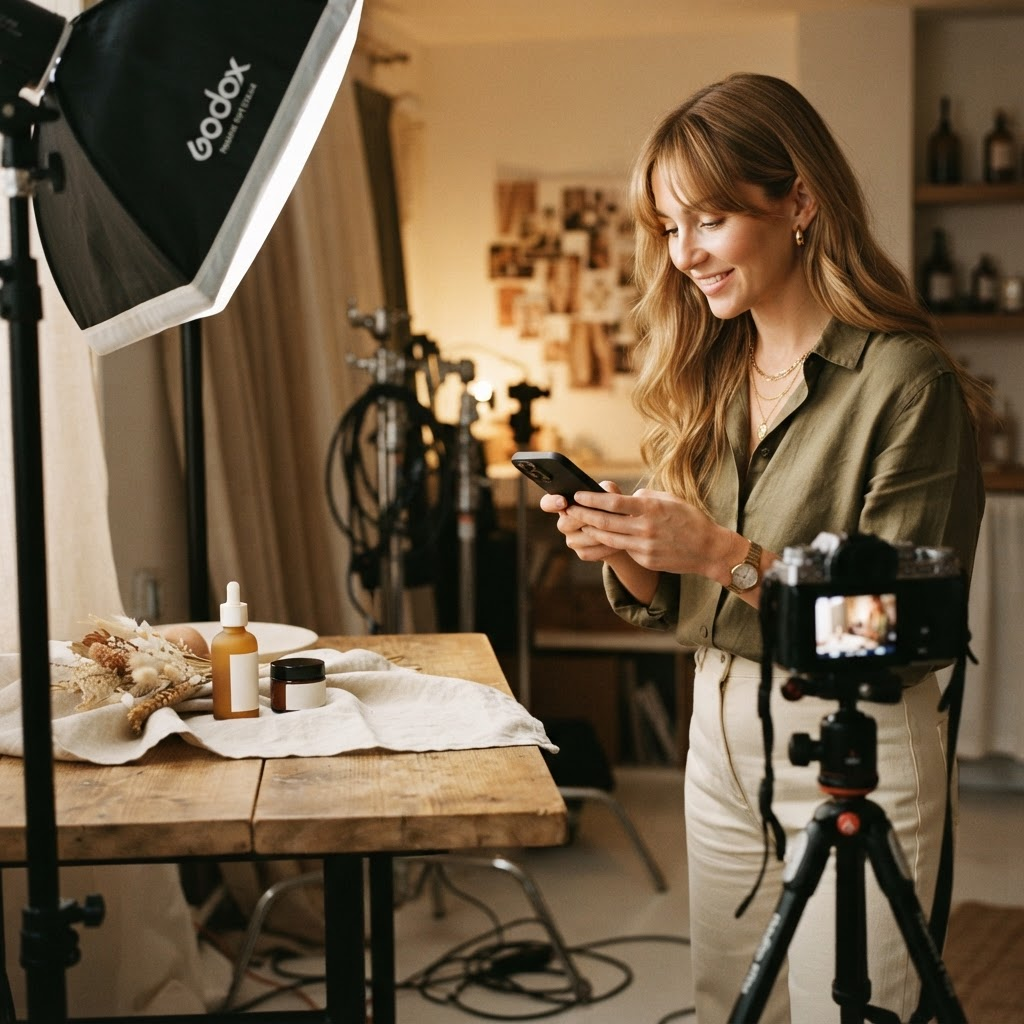
Video Is Now Part of the Listing
Video A+ content lets brands place video directly inside the product detail page and A+ modules, not just in ads. That is a real shift: a shopper can now watch the product work without ever leaving the page. Combined with Amazon’s AI video generator, which can build a short ad from a single ASIN, the barrier to “having video” has effectively disappeared. The new challenge is not access; it is making video that actually moves the decision instead of filling a slot.
What the AI Video Generator Is Good For
Amazon’s AI video tools can turn product images into simple motion, generate OLV-style video ads, and produce quick variations for testing. That is genuinely useful for volume: covering a wide catalog, spinning up seasonal cuts, or getting a baseline ad live for a long tail of SKUs. What it cannot do is invent a point of view. Auto-generated video tends to be competent and forgettable — fine as a floor, weak as a hero. Use it to cover breadth, and invest human direction where the money and the brand impression are concentrated.
- Good for: long-tail SKUs, seasonal variations, fast A/B test cuts, baseline OLV ads.
- Reserve human direction for: flagship hero video, brand launches, category-defining products.
Plan Hero Video Around One Job
The hero video on a listing has one job: resolve the single biggest reason someone hesitates. For a supplement it might be “how do I take this and how fast does it work.” For a device it might be “is it actually easy to use.” Decide that one job before you shoot or generate anything, then build the first three seconds around it. A hero video that tries to say everything says nothing; one that nails the key objection earns the click and the add-to-cart.
Module Video Answers Objections
Inside A+ content, shorter module videos work best as targeted answers rather than brand films. One module shows the texture, another shows the routine, another shows the before-and-after or the size in hand. Because these play in-page, they should be captioned and readable with sound off, and they should reinforce the exact claims in your images and copy. Think of each module video as a proof point that removes one more reason to bounce.
Sponsored Brands Video Needs a Hook
Sponsored Brands video lives in the feed, where it competes with everything else for a half-second of attention. The rules are different from on-page video: hook in the first moment, show the product immediately, keep it tight, and make the benefit legible without audio. This is where an AI-generated baseline can be a starting point, but a sharp human edit — the right first frame, the right pace — is usually the difference between a video that burns budget and one that returns it.
A Repeatable Video System
As with images, the win is a system. Define your video types — hero, module, Sponsored Brands — and the one job each one does. Set brand rules for pacing, type, captions, and color so every cut looks related. Use AI to cover the catalog and to test, and use human direction on the pieces that carry the brand. Documented that way, video stops being a scramble before each launch and becomes a repeatable part of how every product goes to market.